
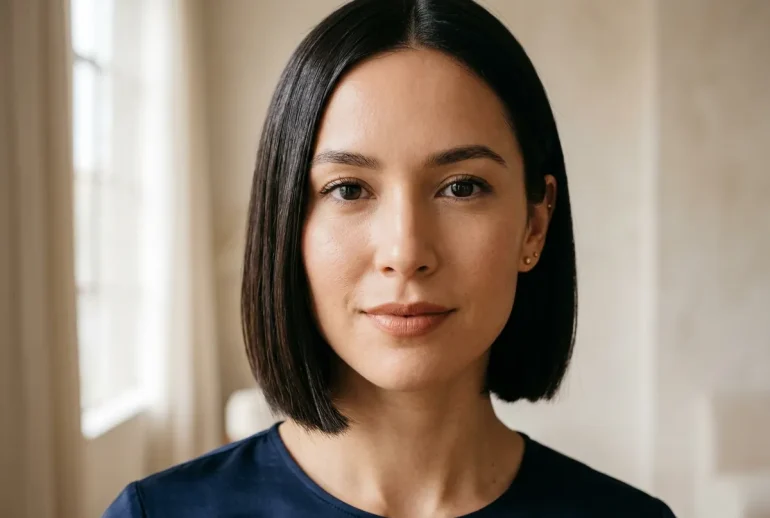
The bob is not just a haircut — it is a decision. It tells the world you know what you want, you value your time, and you dress with intention. In 2026, the bob has become the most searched, most pinned, and most requested cut at salons globally — and for good reason. Whether your hair is curly, straight, thick, or fine, there is a bob length, shape, and finish that will frame your face better than anything else in the style book. This guide walks you through 20 of the best bob hairstyles right now — each one broken down with the details your stylist needs, the styling tips you actually want, and the honest advice no one else is giving you. From understanding your hair type before you commit, to knowing exactly what to say in the salon chair, this is the only bob guide you need to bookmark, pin, and bring with you to your next appointment.
Read Also This Article: https://glamorabeauty.blog/how-to-recreate-the-high-ponytail-that-celebrities-love/
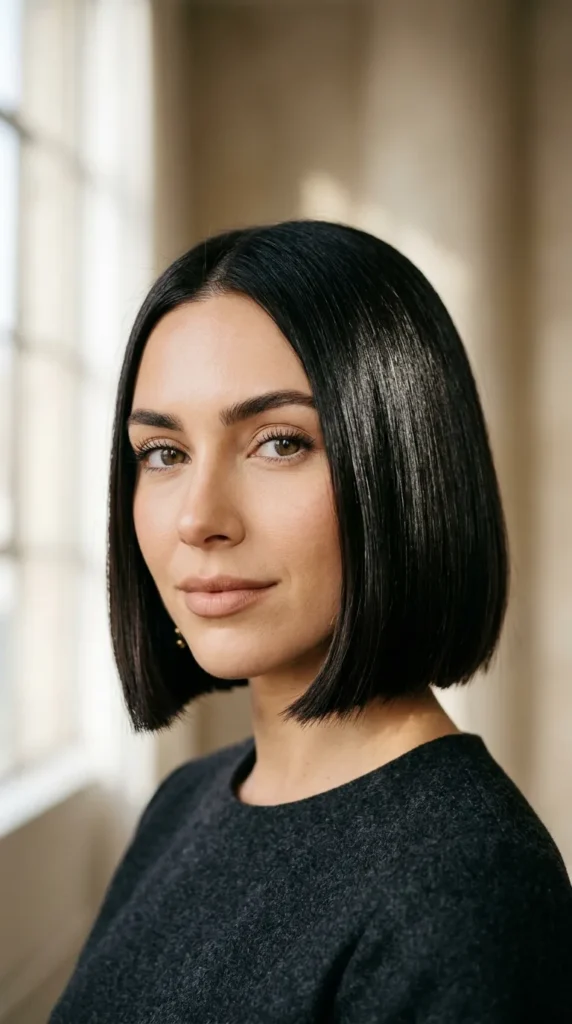
1. The Sleek Blunt Bob
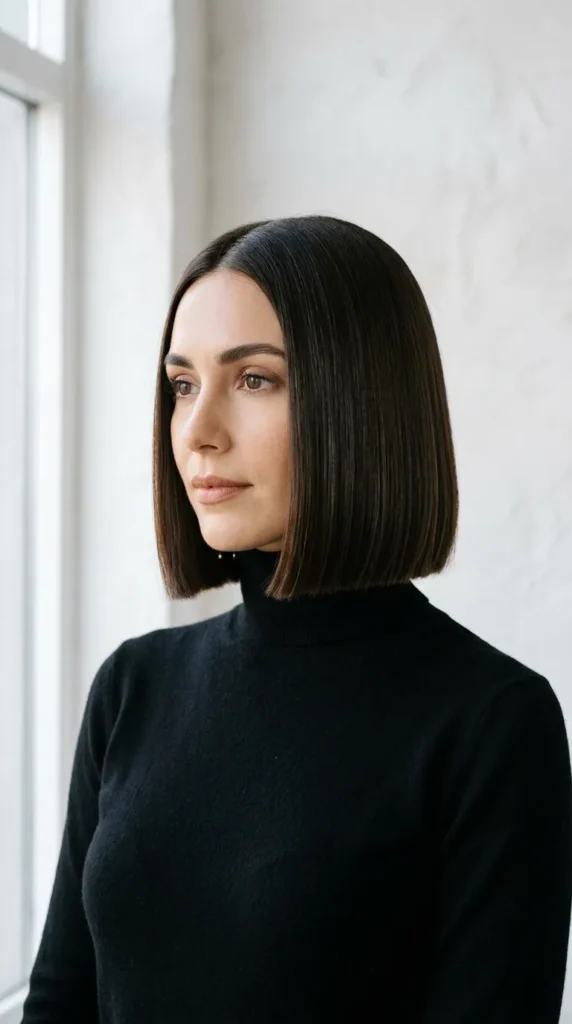
The sleek blunt bob is the original. No layers. No texture. Just a clean, straight cut at or just below the chin.
It works because of geometry. The straight line draws attention to your cheekbones, jaw, and eyes all at once. Nothing distracts from the face.
This cut looks its absolute best in 2026 in these shades:
- Deep espresso brown
- True black
- Cool platinum blonde
The color matters because the blunt line shows up most dramatically on high-contrast, single-tone hair.
Styling tip: Apply a dime-sized drop of shine serum to dry hair. Flat iron in one smooth pass from root to end. Finish with a light-hold hairspray. That’s it.
What to ask your stylist: “I want a blunt cut, no layers, cut straight across at chin length. I want the ends cut dry so you can see the exact line.”
Dry-cutting gives the stylist more precision on the final shape.
Maintenance: Book a trim every 5–6 weeks. Blunt bobs lose their shape faster than textured ones. The clean line is the whole point — protect it.
Best for: Oval, heart, and square face shapes. Straight to lightly wavy hair.
2. Know Your Hair Type Before You Pick a Bob
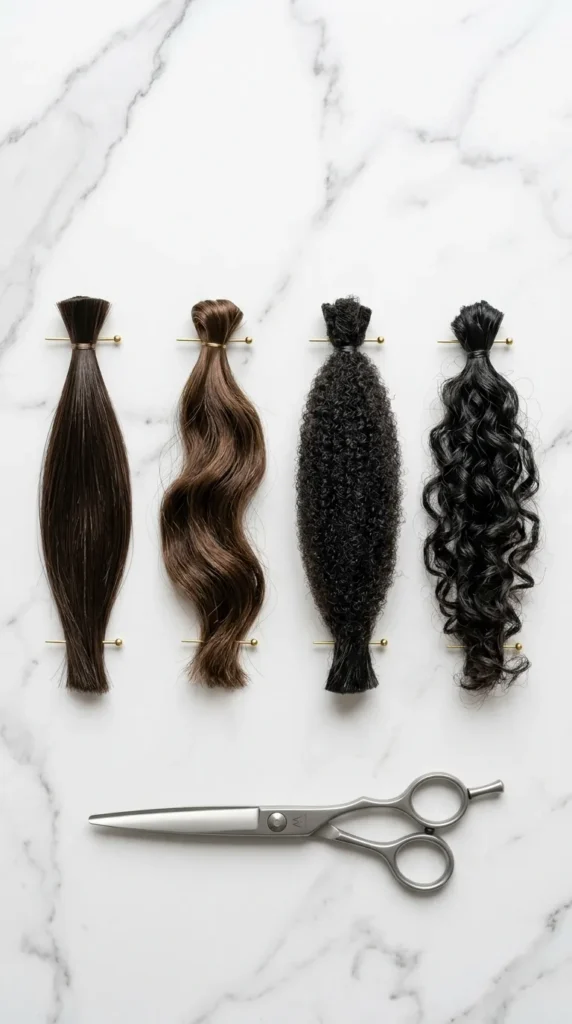
This is the step most guides skip — and it is the reason so many people leave the salon disappointed.
Your hair type changes everything about which bob will actually work for you.
Fine or thin hair: Go for a blunt bob or stacked bob. These cuts make hair look thicker by removing weight from the ends. Avoid heavy layers — they make fine hair look stringy.
Thick or coarse hair: The textured lob or shaggy bob are your friends. These cuts remove bulk without losing length. A blunt bob on very thick hair can look helmet-like.
Naturally wavy hair: Your hair is already doing the work. A beachy wavy bob or curtain bang bob will work with your natural texture instead of fighting it.
Curly hair: Ask for a curl-specific cut — done dry so the stylist can see exactly where each curl sits. Standard wet-cut techniques do not account for shrinkage and often result in an uneven bob once hair dries.
Straight hair: Straight hair shows off clean lines beautifully. The sleek blunt bob and inverted bob are made for you.
Knowing your type before you sit in the chair means your stylist can immediately give you the right recommendation. Walk in informed.
3. The Textured Lob (Long Bob)

The lob — the long bob — sits between your collarbone and shoulder. It is the most universally flattering length of any bob variation, and the textured finish is what makes it look effortless instead of stiff.
What is texturing, exactly? It is when your stylist uses point-cutting (snipping into the ends at an angle) or razor-cutting to remove weight from the tips. The result is soft, piece-y ends that move and breathe instead of sitting flat.
This is the everyday bob. It air-dries well. It waves on its own if you have any natural texture. It goes from casual to polished with a 10-minute blow-dry.
Styling tip for wavy days: Apply a small amount of curl cream to damp hair, scrunch gently, and air dry 80% of the way. Diffuse the rest on low heat. Done.
Styling tip for smooth days: Blow-dry with a medium round brush, rolling the ends under slightly. A light spray of shine oil finishes it.
What to ask your stylist: “I want a lob to my collarbone with point-cut ends for movement. No blunt line. Keep layers minimal.”
Best for: All face shapes. All hair types. This is the cut you bring to someone who has never had a bob before.
4. The Asymmetric Bob
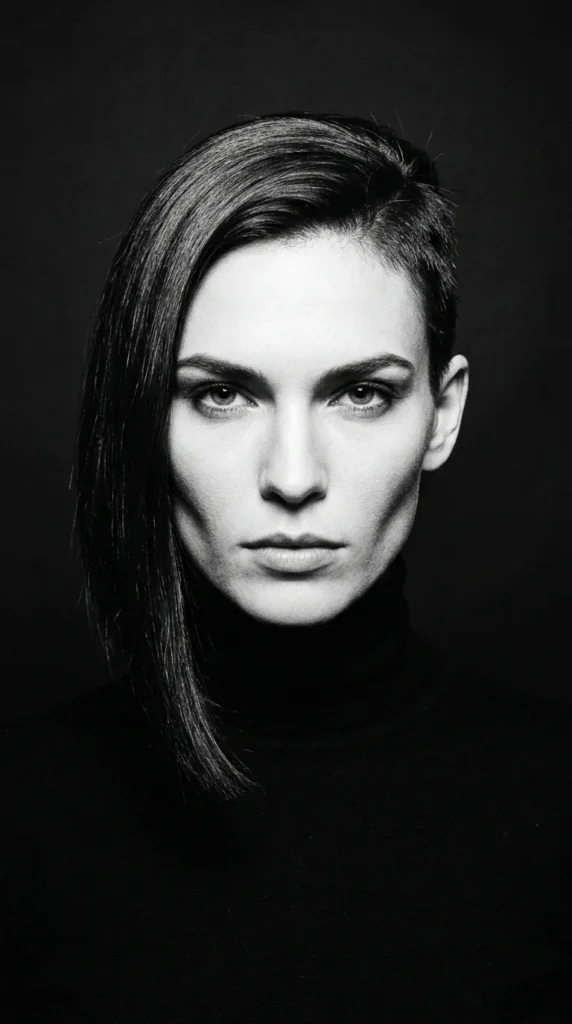
The asymmetric bob is built on imbalance — and that is exactly what makes it work.
One side is longer. One side is shorter. The visual tension between the two lengths pulls the eye toward your face and creates a dynamic, editorial look that symmetrical cuts simply cannot match.
In 2026, the asymmetric bob is being worn with:
- The longer side reaching almost to the shoulder
- The shorter side sitting at the cheekbone or just above the ear
- Smooth, straight finishes that let the angle speak for itself
This is a confident cut. It makes a strong visual statement without needing color or accessories.
What to ask your stylist: “I want an asymmetric bob. The shorter side should sit at [ear/cheekbone — choose one]. The longer side should reach [jaw/collarbone — choose one]. Please keep the longer side smooth so the angle is obvious.”
Styling tip: Blow-dry the longer side straight and smooth using a paddle brush. Let the shorter side sit naturally. The contrast is the whole point.
What to avoid: If you have a very round face, this cut can add width when the shorter side sits at the widest point. Ask your stylist to keep the shorter side above your cheekbone instead.
Best for: Oval and oblong faces. Straight and lightly wavy hair.
5. The Curtain Bang Bob

The curtain bang bob is the most face-softening combination in modern hairstyling.
Here is how it works: the curtain bangs part in the middle and sweep outward toward each temple, framing the eyes and cheekbones. The bob length below keeps the whole style sharp and pulled-together. Together, they create a frame-within-a-frame effect.
Straight vs. wavy curtain bangs — what is the difference?
- Straight curtain bangs give a cleaner, more polished look
- Wavy curtain bangs have a looser, Parisian quality — more undone
Both work. It depends on your personal style.
Styling tip: Use a round brush to blow-dry the bangs outward in two directions — left section blows left, right section blows right. This sets the part and gives them their signature soft sweep.
What about growing them out? Curtain bangs are one of the easiest bang styles to grow out because they blend into the rest of the hair naturally. Once they reach your jaw, they just become part of your layers. No awkward in-between stage.
What to ask your stylist: “I want curtain bangs — parted in the center, swept outward, hitting the outer corner of my eyebrows.”
Best for: Heart-shaped faces and high foreheads. Works across all hair types.
6. The Curly Bob
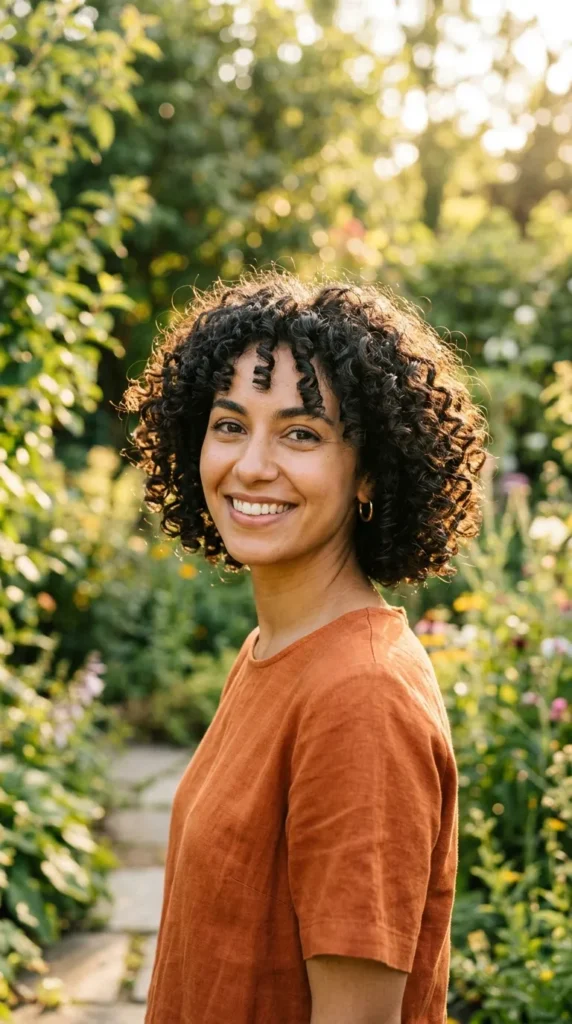
Curly hair and a bob-length cut are one of the most beautiful combinations in hairstyling — when done right.
The key phrase there is when done right.
Ask for a dry cut. This is non-negotiable for curly hair. When a stylist cuts curly hair wet, they are cutting it at a stretched length. Once it dries, curls spring back and shrink — sometimes by 30–50%. A dry cut lets your stylist see exactly where each curl naturally sits and cut accordingly.
Product guide for curly bobs:
- Cream: Best for loose waves and 2B–3A curls. Gives soft definition without crunch.
- Gel: Best for tighter 3B–4A curls. Gives strong hold and defined coils.
- Mousse: Best for fine curly hair. Adds volume without weight.
Styling tip: Apply your product of choice to soaking wet hair. Rake through from root to tip. Scrunch upward. Diffuse on the lowest heat setting. Do not touch while drying — movement breaks the curl pattern and causes frizz.
What to ask your stylist: “I want a curly-specific bob cut dry. I want even volume around my head — no flat sides, no pyramid shape.”
Best for: All face shapes. Curls add natural softness that balances most features beautifully.
7. The French Bob
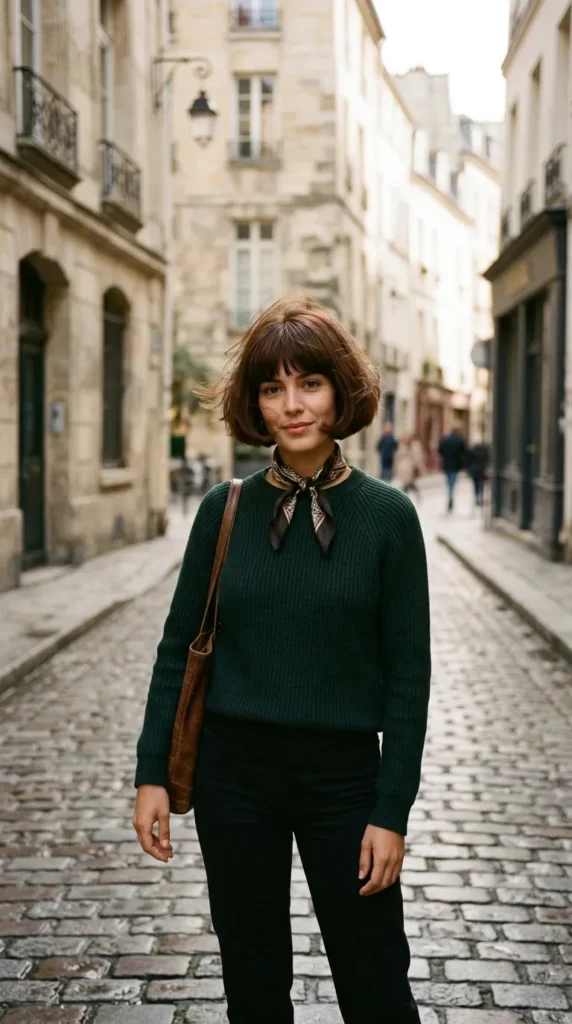
The French bob is the shortest of all the classic bobs — and the most confident.
It sits just below the cheekbone. It usually comes with a full blunt fringe (that is a straight bang, cut to the brow). The shape is round and deliberate.
Why does it look so expensive? Because every millimeter matters. The roundness of the shape, the weight of the fringe, the precise length — there is nowhere to hide imprecision. When it is done well, it looks like a sculpture.
The retro-modern balance is what makes the French bob so compelling right now. It references 1960s Parisian style while sitting completely comfortably in 2026 fashion.
Styling tip: Apply a small pea-sized amount of lightweight pomade to the fringe only. Work it through with your fingers for that slightly undone, lived-in Parisian finish. Avoid heavy products — the bob should look effortless, not stiff.
What to ask your stylist: “I want a French bob — rounded shape, sitting just below my cheekbone. I want blunt fringe hitting right at my eyebrows. Keep everything very precise.”
Maintenance: This cut requires the most frequent trims of any bob — every 4 weeks. The length and shape drift quickly.
Best for: Oval and long face shapes. Fine to medium straight hair.
8. The Stacked Bob
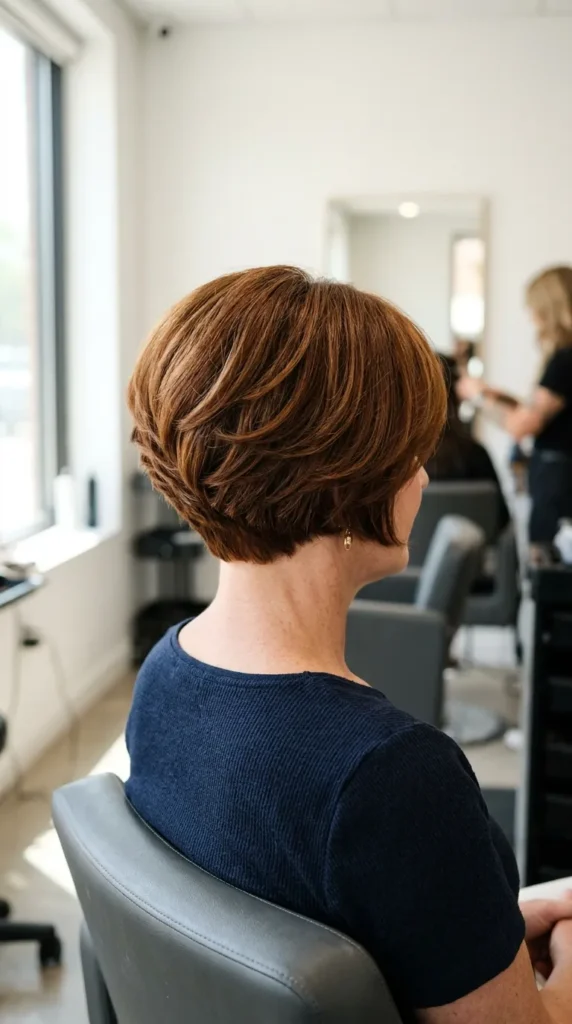
The stacked bob is built for volume. Specifically, volume at the back.
Here is how it works: the layers at the nape are cut very short, and the lengths gradually get longer toward the front and the face. The back of the hair literally “stacks” on top of itself, creating a full, rounded shape.
Look at it from the side. That is where the stacked bob shines. The profile view shows a beautiful curved silhouette that flat bobs simply cannot create.
This is the cut for:
- Fine or limp hair that needs body
- Anyone who wants visible volume without extensions or products
- People who want maximum impact from the back and side views
Styling tip: Blow-dry upside down first to build volume at the root. Then flip upright and use a small round brush to roll the front sections under slightly. This maximizes the rounded shape.
What to ask your stylist: “I want a stacked bob — very short and close at the nape, graduating longer toward my face. I want the back to look very full and rounded when I look at it from the side.”
Maintenance: The stacked shape grows out faster than other bobs. Trim every 5–6 weeks to keep the nape tight.
Best for: Round and oval faces. Fine or flat hair that needs structural support.
9. The Shaggy Bob

The shaggy bob is for people who like their hair to have personality.
It is not a polished cut. It is deliberate, choppy, textured — and that is the entire point.
How the shag is different from regular layers: Regular layers are blended smoothly. Shag layers are intentionally visible. You can see where each layer ends. The ends are piece-y and disconnected. It gives the hair a layered, lived-in quality that smooth bobs do not have.
The 70s influence is very much alive in 2026. The shaggy bob pairs the retro rock-and-roll energy of that decade with the comfortable, low-effort approach of today.
This cut thrives on natural texture. If you have naturally wavy or slightly textured hair, the shag works with your natural movement instead of requiring you to style it into submission.
Styling tip: Spray sea salt spray onto damp hair. Scrunch it upward with your hands. Let it air dry completely. Resist the urge to run a brush through it — brushing kills the texture. The messier it looks, the better this cut works.
What to ask your stylist: “I want a shaggy bob with choppy, visible layers throughout and piece-y ends. Keep it undone-looking — I don’t want anything blended too smooth.”
Best for: Oval and heart faces. Wavy or lightly textured hair.
10. The Deep Side-Part Bob
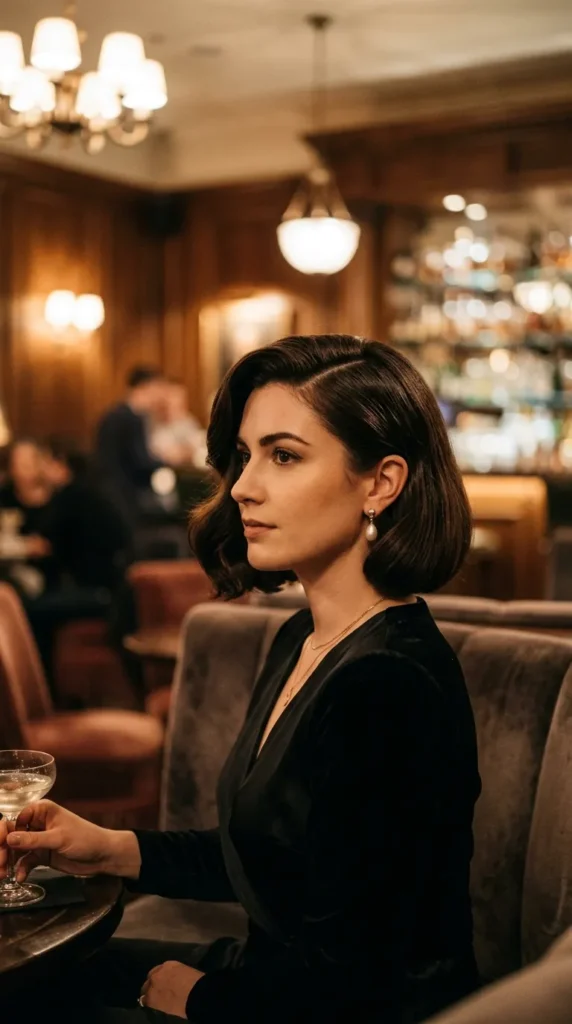
You do not always need a new haircut. Sometimes you just need a new parting.
A deep side part transforms a standard bob into something that looks deliberately styled, sophisticated, and even slightly dramatic — without your stylist touching a single length.
How to do it: Use a fine-tooth comb to find your natural hairline above one eyebrow. Push all the hair heavily to the opposite side. Secure the lighter side behind the ear. Blow-dry the heavier side smooth with a paddle brush.
The result: instant old-Hollywood glamour. The heavy side sweeps across the forehead. The ear and neck on the lighter side are exposed. It creates asymmetry without any cutting involved.
For evening events: add a light-hold hair wax to the roots on the lighter side to keep the look sleek. Tuck the shorter section behind a small pin or clip for a polished, deliberate finish.
For daytime: just let the heavy side fall naturally. The deep part does all the work.
What to ask your stylist: “I want my bob cut to work with a deep side part — can you make sure the weight distribution works for this styling?”
Styling tip: Blow-dry your parting into place while hair is still warm to set the direction. It holds much longer when heat-set.
Best for: All face shapes. Especially softens strong jawlines and square shapes.
11. The Micro Bob
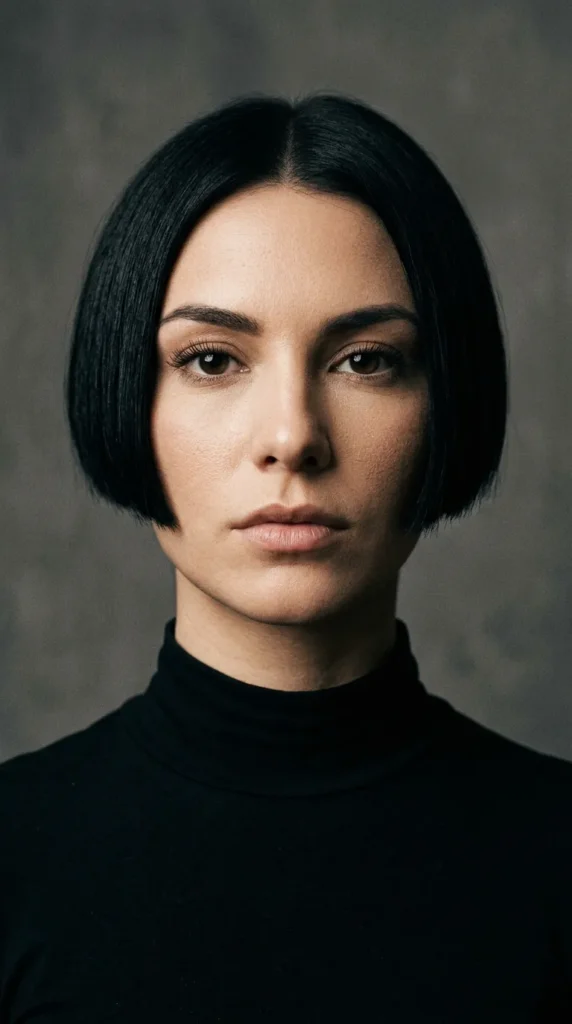
The micro bob is the most daring cut on this list — and the most rewarding when it works.
It is cut above the chin, sitting anywhere from the lower jaw down to just below the earlobe. It exposes the jawline and neck completely.
This cut is sculptural. When it is done with a blunt finish and a clean nape line, it looks almost architectural. The face, jaw, and neck become the full focal point.
Who is this for? People with strong features who want to let them show. People with defined jawlines. People who are ready to commit to short hair and find low-maintenance styling appealing.
What to ask your stylist: “I want a micro bob sitting at my lower jaw. Blunt ends — no texture. Clean nape line, please. Keep it precise.”
The nape line is the detail that makes or breaks this cut. A clean, clipped nape looks expensive. A fuzzy, grown-out nape looks like a haircut that needs attention.
Styling tip: Apply a tiny amount of edge wax along the nape hairline using your fingers. Smooth down. It gives the cut its finished, sculptural look and keeps the nape clean between trims.
Maintenance: Every 4 weeks, minimum. This is the highest-maintenance bob on the list.
Best for: Oval, square, and long face shapes.
12. The Beachy Wavy Bob

The beachy wavy bob is the most low-effort style on this list — and that is intentional.
It is soft, tousled, and relaxed. It looks like you air-dried your hair and went on with your day. The whole appeal is in the undone quality.
Two ways to get this look:
- If you have natural waves: Apply sea salt spray to damp hair. Scrunch upward. Air dry fully. Do not touch while drying — any disturbance while the wave is forming will frizz it.
- If your hair is naturally straight: Use a wide-barrel curling iron (1.5 or 2 inches). Wrap large sections away from your face. Hold for 8 seconds. Release. Do not brush through afterward — break the waves apart gently with your fingers only.
The product difference:
- Sea salt spray: Creates texture, light hold, beachy feel. Great for naturally wavy hair.
- Texturizing spray: Similar to sea salt but less crunchy. Better for fine hair that sea salt can dry out.
What to ask your stylist: “I want a wavy bob that air-dries beautifully. Keep the ends slightly texturized and remove some weight so it doesn’t fall flat.”
Best for: Oval and round faces. Naturally wavy or fine straight hair.
13. The Blunt Bob with Bold Color
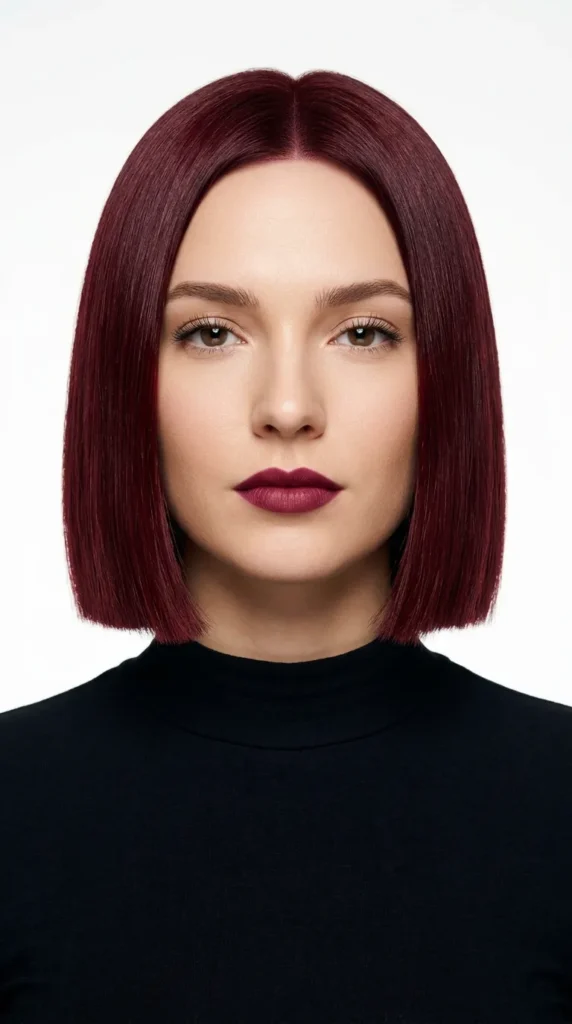
The blunt bob and bold color are a perfect combination — and here is why.
The straight, unbroken line of the blunt cut gives color nowhere to hide. There are no layers to break up the shade. No texture to distract. Just a solid, intentional block of color with a geometric edge. It looks like a piece of art.
The colors trending in 2026 for this look:
- Deep burgundy
- Chocolate brown with a red undertone
- Cool platinum
- Auburn copper
- Forest green (for the brave)
A note on color maintenance: Bold colors on blunt bobs fade faster than you expect because the solid color shows fading more visibly than it would on layered hair. Plan for a gloss treatment every 4–6 weeks to keep the shade saturated.
At-home option: A weekly color-depositing conditioner in your shade can extend the life of your color significantly between salon visits.
What to ask your stylist: “I want a blunt chin-length bob with [color]. I want the ends cut absolutely straight — the color needs a clean edge to land on.”
Styling tip: Blow-dry smooth and finish with an anti-humidity spray. This locks the color and keeps the finish glossy.
Best for: All face shapes. Straight and lightly wavy hair shows the color most clearly.
14. The Inverted Bob vs. The Stacked Bob — Knowing the Difference
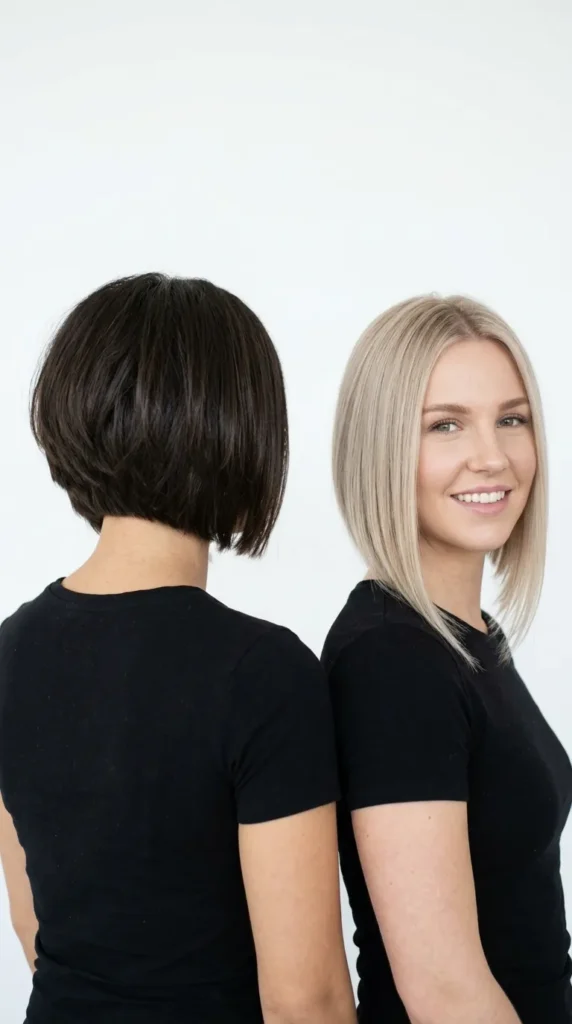
These two bobs get confused constantly — and they are meaningfully different.
The stacked bob: shorter in front, much fuller and layered at the back. The volume concentrates at the nape. From the side, you see a rounded, full curve at the back of the head.
The inverted bob: shorter at the back, progressively longer toward the front. From the side, you see a clear diagonal line — the front pieces are longer, the back sits higher. It is sleek and angular where the stacked bob is round and full.
Which one is right for you?
- Want volume and fullness? Go stacked.
- Want a sleek, geometric angle? Go inverted.
- Have fine hair? Stacked adds more visible body.
- Have thick hair? Inverted creates a clean line without adding bulk.
What to ask your stylist for the inverted bob: “I want an inverted bob — shorter at the nape, longer toward the front. I want a noticeable diagonal angle. Keep it smooth, no volume at the back.”
Styling tip for the inverted bob: Blow-dry the back sections underneath (rolling inward) and the front sections forward. This emphasizes the angle and keeps everything laying in the right direction.
Best for inverted bob: Oval and long faces. Straight, smooth hair.
15. The Silver and Grey Bob
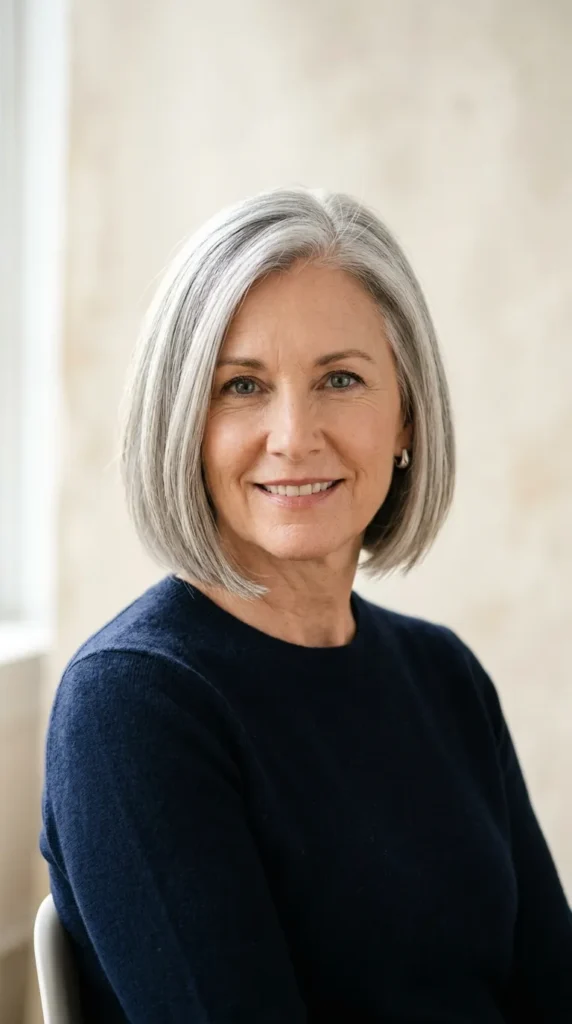
Silver and grey hair in a bob is one of the most deliberate, striking looks in 2026 — and it has stepped far beyond being a trend.
It is now a choice. A statement. A celebration.
Natural grey vs. coloured silver: If you are not naturally grey yet but want this look, ask your colourist for “silver blonde” or “steel grey” toning. It is done through a bleach and tone process. Expect 2–3 sessions for darker starting hair.
If you are naturally greying, the right bob cut will make your grey look intentional and sophisticated instead of grown-out.
The best bob styles for silver hair:
- Blunt bob (the solid color makes the cut look extremely polished)
- Textured lob (adds dimension to flat grey)
- Stacked bob (gives structure and fullness)
The most important maintenance tip: Use a purple toning shampoo every 7–10 days. Silver and grey hair picks up yellow tones quickly — from sun exposure, hard water, and product buildup. Purple shampoo neutralizes the yellow and keeps silver looking cool, bright, and intentional.
Styling tip: A lightweight glossing serum on dry silver hair makes it look luminous instead of dull. Work through the mid-lengths and ends only.
Best for: All face shapes. All hair types.
16. The Bob with Babylights
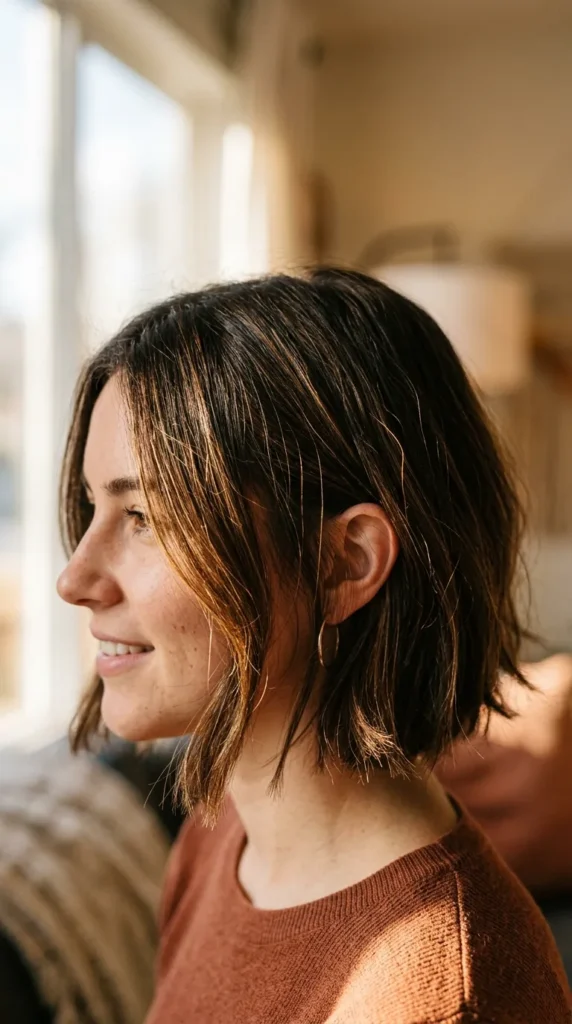
Babylights are the most natural-looking way to add dimension to a bob — and most people do not know exactly what they are.
Babylights vs. highlights vs. balayage — here is the difference:
- Highlights: Sections of hair foiled with lightener. Usually noticeable, chunky, and clearly placed.
- Balayage: Color painted freehand onto the surface of the hair. Gives a sun-kissed, gradient effect.
- Babylights: Ultra-fine, very delicate sections — sometimes as thin as a single millimeter — foiled throughout the hair. The result looks like natural variation in color, not a salon technique.
Babylights at bob length work beautifully because the color is contained in a short canvas. Every single tone is visible. Nothing gets lost in length.
Best color combinations:
- Caramel babylights on dark brunette → adds richness and warmth
- Honey gold babylights on medium blonde → creates a natural sun-kissed glow
- Copper babylights on dark hair → gives a vibrant, dimensional effect in sunlight
Maintenance: Babylights last 3–4 months before needing a refresh. They grow out gracefully — no harsh lines of demarcation.
Styling tip: Blow-dry with a round brush and roll the ends under slightly. This exposes different tones within the length and makes the babylights catch the light from multiple angles.
17. What to Tell Your Stylist — Go In Prepared
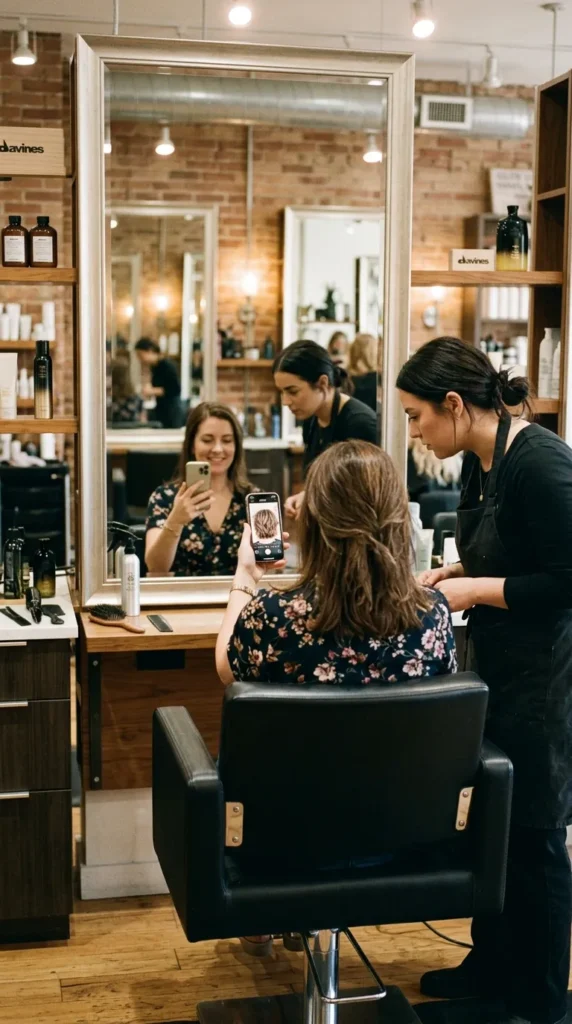
Walking into a salon knowing exactly what you want is one of the most underrated skills.
Here is what to communicate clearly:
Length: Use landmarks your stylist can measure to. Say “chin length,” “below the earlobe,” “collarbone,” or “shoulder.” Do not say “short” — short means something different to everyone.
Finish: Tell them whether you want blunt (straight across, no texture) or textured (point-cut or razor-cut for movement).
Weight: If you have thick hair, say “I need weight removed from the interior.” This tells them to use internal thinning without shortening the outside length.
The parting: Tell them where you typically wear your parting — center, side, or deep side. The cut should be built around how you actually style it at home.
Reference photos: Bring at least two. One of the length you want, one of the finish/texture you want. They do not have to be the same photo.
Questions to ask before they start:
- “Which bob length do you think will suit my face shape?”
- “Should I get a dry cut or wet cut for my hair type?”
- “How often will I need to come back for trims?”
A good stylist will welcome all of these questions. Your preparation makes their job easier.
18. The Curtain Bang Bob — Growing Them Out Without the Awkward Stage

Getting curtain bangs is easy. Growing them out is where most people panic.
Here is the truth: curtain bangs are one of the best bang styles to grow out. Because they sweep to the side from the start, they blend into your layers naturally as they grow. There is no sudden awkward horizontal fringe to deal with.
The grow-out stages:
- Weeks 1–4: Bangs sit at the brow — peak curtain bang moment.
- Weeks 5–8: Bangs reach the nose. Pin them to the side with a small clip while styling to keep them controlled.
- Weeks 9–12: Bangs reach the lip. At this stage, they can be swept fully to the side and worn as long layers framing the face.
- Month 4+: They have become part of your face-framing layers. No one will know they were bangs.
Styling trick during grow-out: Apply a tiny amount of pomade to dry bangs and smooth them into the rest of your hair. The product weight keeps them from flipping outward at the awkward in-between stage.
What your stylist can do: Ask for a “bang reshape” appointment — just 10 minutes — where they trim any pieces that are refusing to lay correctly. This keeps the grow-out looking intentional.
19. Bob Haircut Care: Keep It Looking Salon-Perfect Between Trims
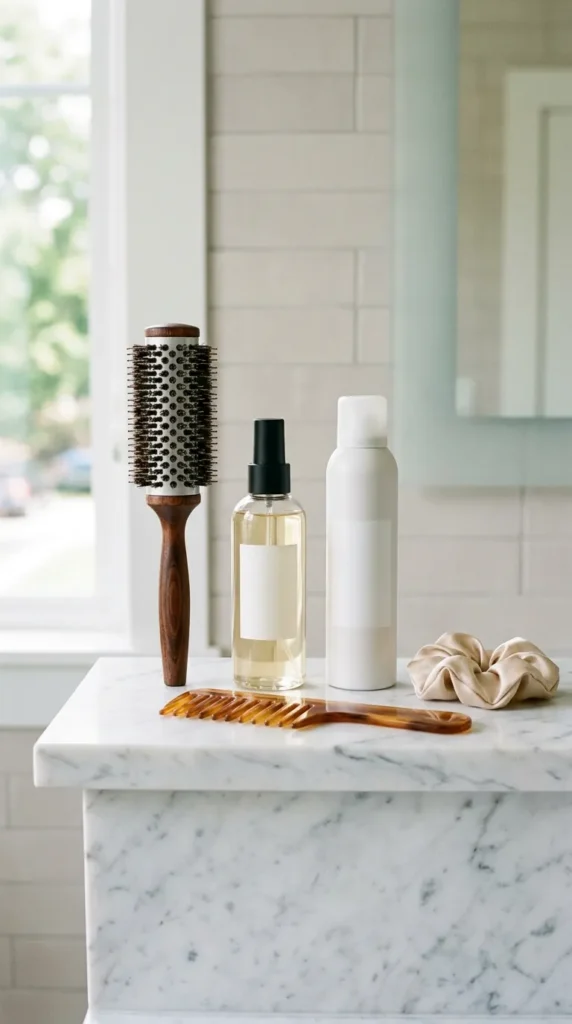
A great bob requires consistent care — but it does not require a complicated routine.
Trim schedule by bob type:
- Blunt bob: every 4–6 weeks (the clean line softens quickly)
- Textured or shaggy bob: every 6–8 weeks
- French bob or micro bob: every 3–4 weeks
Daily morning refresh: Keep a small spray bottle with water and a drop of leave-in conditioner next to your sink. Spritz the ends in the morning and scrunch or smooth as needed. It takes 60 seconds and removes slept-on flatness instantly.
Silk pillowcase tip: Short hair creates more friction against a cotton pillowcase than long hair does — because it has no weight to keep it down. A silk pillowcase reduces morning frizz, breakage, and the need for morning restyling significantly.
Heat protection: Short hair heats up faster than long hair because there is less total mass. The same flat iron temperature that is manageable on long hair can damage a bob faster. Always apply a heat protectant spray before any hot tool.
Dry shampoo placement: Apply only at the root — never mid-length or at the ends. Sprinkle at the crown, work in with fingertips, then use a round brush to distribute and add lift. This is the fastest way to buy your bob another day between washes.
20. Bob Hairstyle Accessories That Actually Work
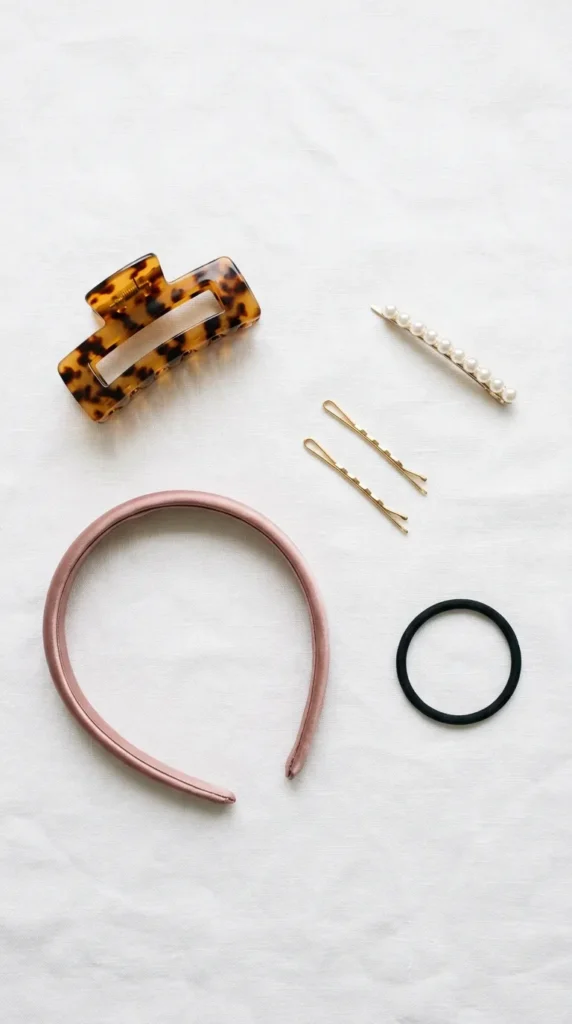
People assume short hair cannot be accessorized. They are wrong.
Bobs work beautifully with the right accessories — you just need to know which ones to reach for.
Small claw clips: Perfect for half-up styling on a lob or textured bob. Clip the top section back at the crown. It takes 10 seconds and instantly looks intentional.
Slim headbands: A thin satin or structured headband pushed back slightly from the hairline turns any bob into an immediate off-face style. Works especially well with the French bob and curtain bang bob.
Bobby pins: Used in pairs, gold or pearl-embellished pins swept into the side of a sleek blunt bob create an instant evening look. Place them above the ear on the lighter side of a side-part bob.
A silk scrunchie at the nape: For lobs, a small silk scrunchie can gather the back of the hair into a mini half-up style that keeps the face clear without losing the bob shape.
Avoid:
- Heavy, oversized clips that outweigh the hair
- Tight elastic bands at mid-length (creates a weird bump on a bob)
- Headbands placed too far back — they flatten the top of short hair
Styling tools worth investing in:
- A medium round brush (1.5 inch barrel) for everyday blow-drying
- A tourmaline flat iron for sleek finishes that do not dry out the hair
- A wide-barrel curling iron (1.5–2 inch) for loose beachy waves
21. Find Your Perfect Bob by Face Shape — The Complete Guide
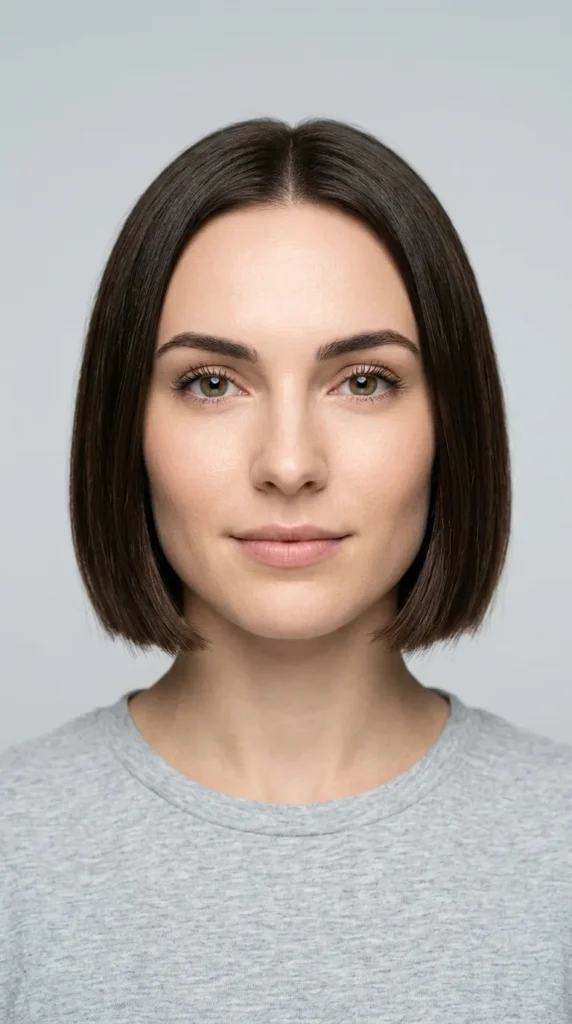
The right bob for your face shape is the difference between looking polished and looking off — even with the exact same cut.
Here is the complete breakdown:
Oval face: You have the most freedom. All bob cuts work. Explore freely. The blunt bob, lob, French bob, and asymmetric bob all suit an oval face equally well.
Round face: Go for length and angles. The textured lob, asymmetric bob, and inverted bob all create vertical lines that draw the eye up and down instead of side to side. Avoid chin-length blunt bobs that sit at the widest point of the face.
Square face: Soften the angles. The curtain bang bob, beachy wavy bob, and textured lob all add softness around the face. Avoid very blunt, angular cuts that echo the sharpness already there.
Heart face: You have a wider forehead and narrower jaw. Balance it by choosing bobs that add width at the chin — the textured lob and curtain bang bob both do this naturally.
Long or oblong face: Add width. The French bob, blunt bob, and micro bob all create horizontal visual weight that shortens and balances a long face. Avoid very long lobs that add even more length.
Diamond face: Wide cheekbones, narrow forehead and jaw. The curtain bang bob and textured lob with side-swept framing are the most flattering. Avoid styles that add width at the cheekbones.
Conclusion
The bob is not a single haircut. It is a category — and inside that category lives a version of this cut that is made for your face, your hair, and your life exactly as it is right now.
The 20 ideas in this guide cover every hair type, every face shape, and every level of commitment — from the bold micro bob to the grow-out-friendly textured lob. They cover the styling tips your stylist probably never explained, the product choices that actually matter, and the salon language you need to walk in and get exactly what you want.
Here is what to do next: screenshot the two or three bobs that caught your attention as you read. Take them to your next appointment. Show them to your stylist and ask, “Which of these works best with my hair type and face shape?” That single conversation — armed with real references — will get you a better result than any amount of guessing.
The right bob does not just change your hair. It changes how you walk into a room. Save this guide, pin your favorites, and go make the cut.