
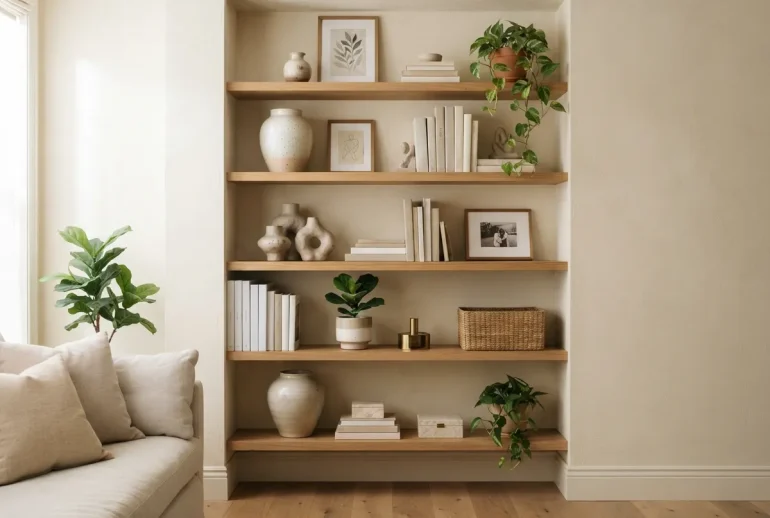
A beautifully styled shelf can completely transform a room. What was once an ordinary storage space can become a polished focal point filled with personality, texture, and visual interest. The secret is not owning expensive décor—it is knowing how to arrange the pieces you already have.
For more ideas: See our favorite [How to Create Trendy Summer Nail Designs]
Whether you are decorating built-in shelves, a bookcase, floating shelves, or a living room console, these interior designer-approved tips will help you create a balanced look without making the space feel cluttered.
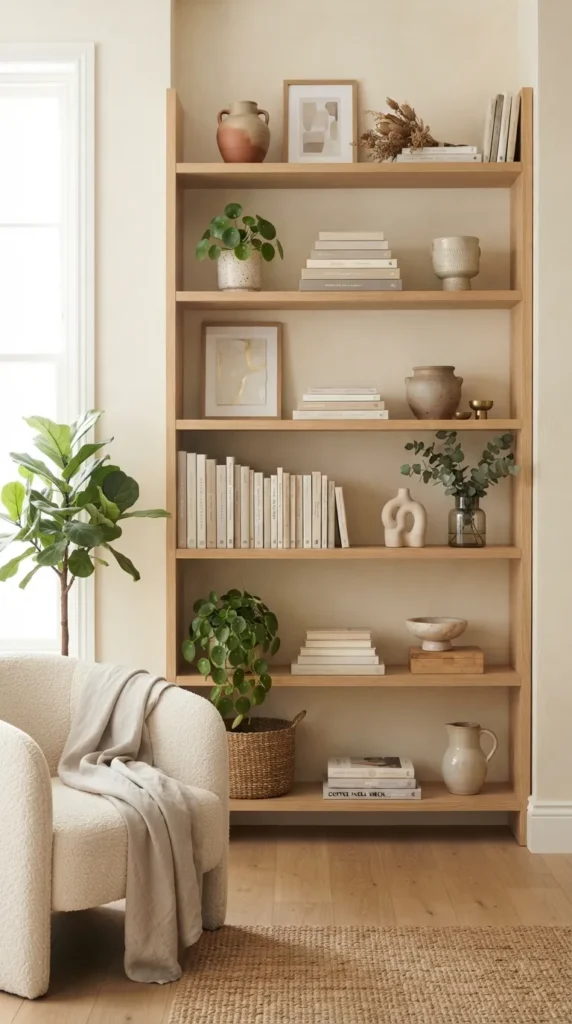
Start With a Clean Slate
Before styling anything, remove every object from your shelves. Starting with empty shelves allows you to see the available space clearly and prevents you from automatically returning everything to its previous position.
Give the shelves a quick clean, then gather the items you may want to display. Good options include:
- Hardcover books
- Ceramic vases
- Framed photographs or artwork
- Decorative bowls
- Candles
- Small plants
- Sculptures
- Meaningful travel souvenirs
Do not feel pressured to use every item. Interior designers carefully edit their displays, choosing only pieces that contribute to the overall look.
Choose a Simple Color Palette
A consistent color palette helps separate objects feel connected. Select two or three main colors that complement the room, then introduce small accents for contrast.
For example, you could combine warm white, natural wood, and black with touches of muted green. In a softer room, try cream, beige, pale pink, and brass.
You do not need every object to match perfectly. The goal is to repeat similar tones throughout the shelves so the entire arrangement feels intentional.
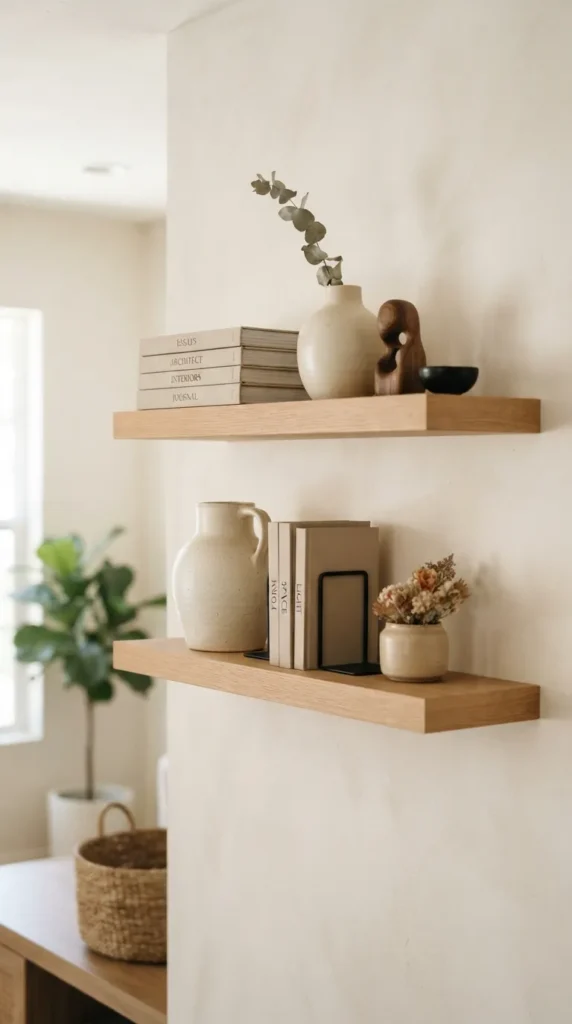
Place the Largest Pieces First
Begin with your biggest objects, such as large vases, framed artwork, baskets, or substantial decorative bowls. These pieces act as visual anchors and make it easier to arrange smaller items around them.
Spread large objects across different shelves instead of placing them all in one area. If a tall vase sits on the upper-left shelf, consider placing a larger bowl or framed picture toward the lower-right side. This creates balance without making the layout look too symmetrical.
Avoid centering every large item. Slightly off-center placements often feel more relaxed and professionally styled.
Use Books as Decorative Objects
Books are among the most useful shelf-styling accessories because they add color, height, and structure. Arrange some vertically and stack others horizontally to create variety.
Horizontal book stacks can also serve as platforms for smaller objects. Place a candle, decorative knot, small bowl, or sculptural piece on top to give it more presence.
For a cohesive appearance:
- Group books in similar colors.
- Mix stacks of two or three with vertical rows.
- Leave some book spines visible for personality.
- Avoid filling every shelf entirely with books.
Choose books that reflect your interests whenever possible. A shelf should feel personal, not like a furniture showroom.
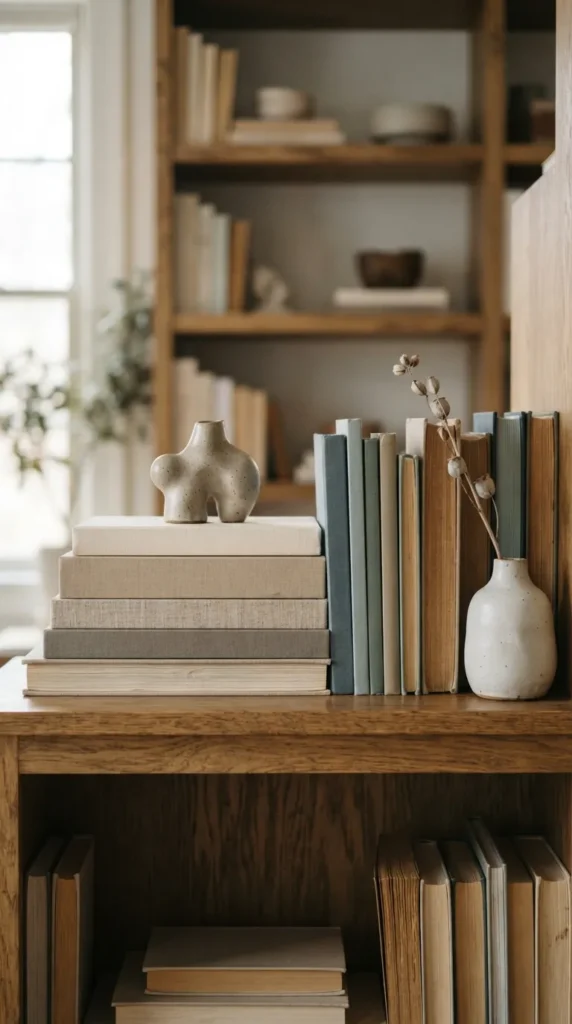
Create Small Groups of Objects
Instead of spreading individual accessories evenly across a shelf, arrange them in small groups. Designers often use groups of three because odd-numbered arrangements tend to look natural and visually interesting.
Try combining objects with different heights and shapes, such as:
- A tall vase
- A medium framed photograph
- A small decorative bowl
Make sure the objects relate to one another through color, material, or style. They do not need to match, but they should look like they belong in the same visual story.
Overlapping items slightly can also add depth. A small vase placed partly in front of a frame looks more layered than three objects arranged in a perfectly straight line.
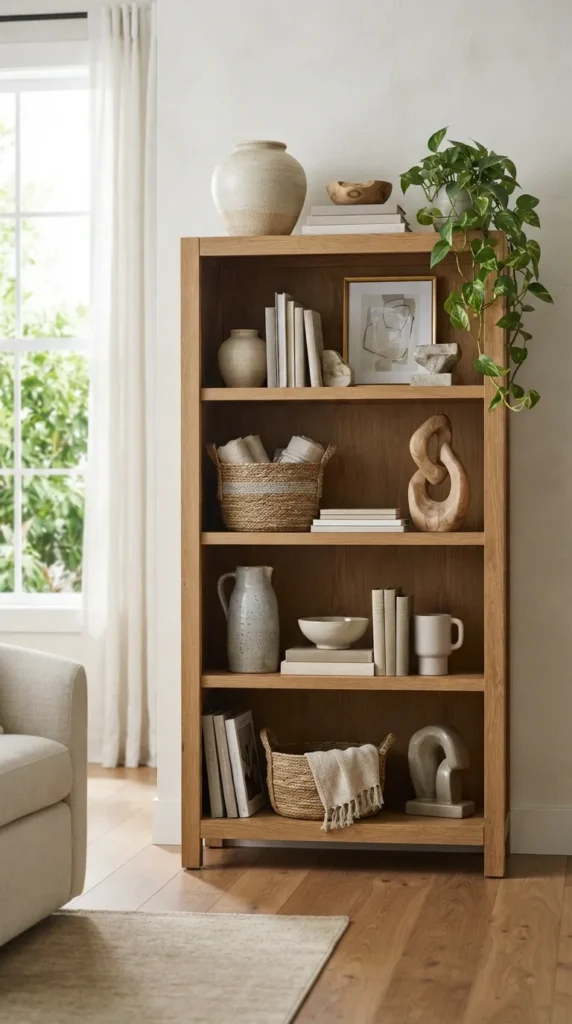
Mix Heights, Shapes, and Textures
Shelves become more interesting when they include contrast. Pair smooth ceramic pieces with woven baskets, glossy glass with natural wood, or straight book edges with curved sculptures.
Varying the height of objects also keeps the eye moving. If everything is the same size, the display may appear flat. Use tall items to draw attention upward and smaller accessories to create quiet resting points.
Plants are especially useful for softening hard lines. A small trailing plant can bring movement to a rigid bookcase, while a simple potted plant introduces natural color.
Leave Plenty of Empty Space
One of the most important shelf-styling rules is knowing when to stop. Empty space is not wasted space—it gives each object room to stand out.
Step back and look at the entire bookcase. If one shelf feels heavy, remove an item or move it to a quieter area. Avoid filling every gap simply because space is available.
A well-designed shelf usually has a mix of decorated areas and open areas. This balance keeps the display calm, elevated, and easy to appreciate.
Add Something Personal
The most memorable shelves tell a story. Once the main arrangement is balanced, include a few personal objects that make the display uniquely yours.
Consider adding a favorite family photograph, a handmade ceramic piece, an heirloom, or a souvenir from a meaningful trip. These details prevent a carefully styled shelf from feeling generic.
Keep personal pieces selective so they remain special. One meaningful object placed thoughtfully can have more impact than an entire shelf filled with keepsakes.
Final Takeaway
Styling shelves like an interior designer comes down to balance, variety, and thoughtful editing. Start with larger anchors, layer in books and decorative objects, mix different textures, and leave enough open space for everything to breathe.
Most importantly, allow your shelves to reflect your personality. Save these tips for later, then shop your own home and start experimenting—you may already have everything needed to create a designer-worthy display.